AI Quality Mark: Elevate Your School’s AI Integration

Key Aspects of the AI Quality Mark
Achieving the AI Quality Mark
The awards are categorised as Progress, Bronze, Silver, and Gold, based on the overall score.


Why Should Schools Go Through the Quality Mark?
By engaging with our framework, you will be encouraged to consider how AI affects all areas of school life through the self assessment submission. It allows you to critically evaluate where your school is using AI and will give you the necessary tools to plan your strategy moving forwards. Achieving the AI Quality Mark demonstrates to your staff, students, governors and community that you are dedicated to using AI responsibly and ethically across all areas of school life.
Our Process
Embedding AI into your organisation is a journey and we are here to support you every step of the way.
Initial Meeting
At the Good Future Foundation, we believe that this Quality Mark should add value to what you are doing in schools. Therefore, we ensure that we meet with every school who shows an interest in submitting for the Quality Mark before they even start!
Self-Assessment
After having a meeting with a member of our team, you will be sent the Framework for our AI Quality Mark. You are then able to self-assess your organisation against this criteria to give yourself a benchmark. We encourage everyone to do this, even if you feel you might not be at the place you would like to be as it gives you a starting point on your AI journey. There is no time limit on when you go through the Quality Mark process and you can submit as many times as you would like!
Review and Feedback
This self-assessment process is moderated by the Good Future Foundation to ensure consistency and quality. Once you submit your self assessment and evidence, it will be reviewed by one of our assessors. They will then book a follow-up meeting with you to go through the feedback and suggest ways you can move forward to the next stage of your journey.
Recognition for receiving the AI Quality Mark


Schools Leading
the Way in AI Education
Meet the pioneering schools and trusts transforming education through responsible AI integration. From achieving quality standards to implementing innovative practices, these institutions are setting new benchmarks in how AI can enhance teaching and learning.









.png)





.png)




















For schools just starting out in AI, the AI Quality Mark is an excellent guide. It demystifies the process of incorporating AI into education, offering clear, actionable steps. The self-assessment tools and support from the Good Future Foundation gave us the confidence to move forward, ensuring that AI benefits both staff and students in meaningful ways.”

"Lorem ipsum dolor sit amet, consectetur adipiscing elit. Suspendisse varius enim in eros elementum tristique. Duis cursus, mi quis viverra ornare, eros dolor interdum nulla, ut commodo diam libero vitae erat."

It is wonderful to have all the work we are doing in this area recognised and validated in this way. It's such exciting work to be doing, not only for the potential of the tech but also (and perhaps most significantly) because it gives me a chance to work with so many different brilliant colleagues in school, without whom none of it would happen! And of course the chance to engage in great partnerships and collaborations beyond school. A huge thank you to the GFF for all the support and guidance you give, and for the community platform which I continue to find so helpful in terms of sharing ideas and connections.
The AI Quality Mark was not something to apply for then forget, it was a process to help us ensure we are using AI in a standard, ethical and safe way across our whole school community. When we first applied in September we wanted to see where we were and what more we needed to do. The AI Quality Mark feedback helped us identify our strengths and explored areas we could work on and build into our digital strategy for the year. Resubmitting after looking at the feedback has enabled us to grow as a school and embed AI. The AI Quality Mark is more than an award, it is a developmental process that helps you as a school move forward in the ever changing world of AI. The feedback from the assessors is highly structured, relevant and supportive. I would recommend every school take the AI Quality Mark now to show their commitment to using AI safely and ethically as well as seeing where you have strengths and where you need to develop as this can build into your digital strategy for your whole school community
In Portsmouth, our vision is rooted in a shared responsibility to ensure technology is used to enhance teaching and learning, reduce workload, support accessibility and inclusion, and help narrow the digital divide so that every member of our community can choose the right tool, for the right outcome, at the right time.
Working through the AI Quality Mark framework has given us the opportunity to reflect on how far we’ve come, as well as identify priority areas, demonstrating that this isn’t a tick-box exercise, but an evolving process in a rapidly changing world. It’s a brilliant example of how our city-wide approach makes a difference.
At LEO Academy Trust, we've long believed that AI has the potential to be a powerful force for good in education, but only if it's developed and used responsibly. So, when the opportunity arose to apply for the AI Quality Mark, we saw it as a perfect chance to not only validate our approach but also to refine our internal processes. Our journey was filled with both "Yes we are doing that well" moments and “Could we be doing that better?” moments, all of which have ultimately strengthened our commitment to ethical AI use in our organisation.
Going through the AI Quality Mark framework was a really interesting process. The framework made us look deeper into the things that we either hadn't fully embedded yet. Providing evidence for each section was an excellent way to consolidate our work and showcase the progress we had made. The process gave us the tools and the perspective to ensure that as we continue to innovate, we do so with integrity and a deep sense of responsibility.
The self-evaluation process of the AI Quality Mark gave us much needed structure. It helped us see what we were already doing and what we needed to develop further.
As the first school outside the UK achieving the Gold AI Quality Mark, we’ve also faced and overcome various challenges in our AI journey, such as finding space for AI learning and exploration in an already full calendar. This also meant getting buy in from staff who were already stretched. So we started small with a core group to research, trial and review. Our student leaders have been essential and often two steps ahead of us as we are also learning alongside them.
“The Good Future Foundation’s AI Quality Mark process has been an invaluable experience for our school. Achieving the Bronze award provided us with a clear and structured framework to assess our current AI integration and identify areas for growth. The process was well-organized and encouraged meaningful reflection on how AI can enhance teaching, learning, and operational efficiency. The structured self-assessment and external moderation gave us confidence that we are on the right track while also helping us pinpoint specific strategies for improvement.
Beyond the accreditation itself, the Quality Mark has given us a solid benchmark to guide our future AI initiatives. The insights gained through the assessment have informed our strategic planning and policy development, ensuring that AI is embedded in a way that is both responsible and effective. We now have a clear roadmap for expanding our use of AI across the curriculum and operational aspects of the school, and we look forward to continuing this journey with the support of the Good Future Foundation.”
“Completing the AI Quality Mark has been an invaluable experience for our Trust. It provided a structured framework that allowed us to clearly identify our strengths in AI integration while also highlighting the next steps we need to take. The logical progression through the key aspects of leadership, curriculum, and professional development helped us plan effectively.
For schools just starting out in AI, the AI Quality Mark is an excellent guide. It demystifies the process of incorporating AI into education, offering clear, actionable steps. The self-assessment tools and support from the Good Future Foundation gave us the confidence to move forward, ensuring that AI benefits both staff and students in meaningful ways.”
Our assessors
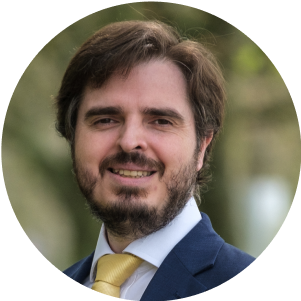

Dr Andy Kemp is Principal of The National Mathematics and Science College, based in the Midlands on the edge of the Warwick University campus. The National Mathematics and Science College is the top performing specialist STEM sixth form day and boarding school in the UK. Joining NatMatSci was something of a homecoming for him as he studied for his BSc in Mathematics, PGCE, MSc and EdD in Mathematics Education all at the University of Warwick. More recently he has completed his MBA at UCL in 2017.
He has spoken at conferences around the world in relation to the role that technology plays in education, and in particular mathematics education, and has been published in several journals, magazines, and collective works.
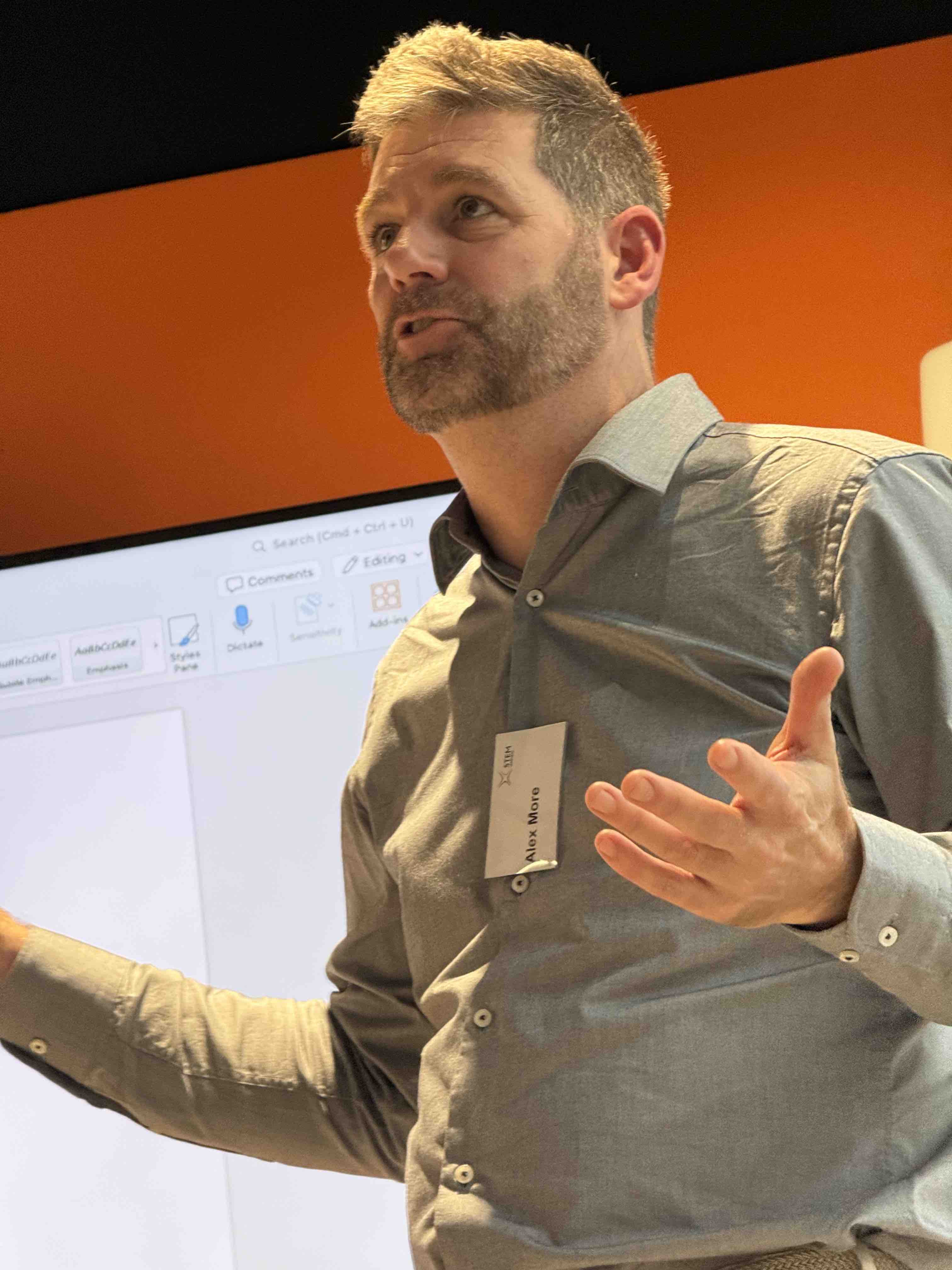
Alex More is an education consultant who specialises in the safe and ethical implementation of AI at scale in schools. With over 20 years of senior leadership experience, he develops strategic CPD programmes embedding AI, STEM, and digital literacy for schools, MATs, and global education organizations.
Part of Oxford University's AIEOU community, Alex's award-winning 'Future Classroom' project was named a Top 100 Global Innovation in 2023. Currently completing an EdD at Bath University exploring AI, sustainability, and social justice in education, he has published with Taylor & Francis and delivers keynote talks internationally.
Alex works as an AI Advisor with organisations including STEM Learning, TeachMateAI, and Good Future Foundation, having led events for over 50,000 educators globally. He provides advisory support for AI leadership and teacher training worldwide.

Anneliese has over 15 years of experience in education, digital learning, and edtech strategy, working across schools, non-profits, and national organisations. Before joining the Good Future Foundation, she was Head of Digital Learning at a leading independent prep school in the UK, where she led digital transformation initiatives, teacher training, and AI integration. She has also worked with national partners on EdTech projects and is a Global EdTech Awards Judge. Anneliese has dedicated her career to designing impactful learning programmes and supporting educators in digital education. In 2025, Anneliese joined the Good Future Foundation as Project Manager for the AI Quality Mark, a flagship programme designed to ensure safe, effective, and evidence-informed use of AI in education.

Bukky Yusuf is an author, leadership coach, public speaker, trustee and Thought Leader with over twenty years teaching experience. She has undertaken several leadership roles within mainstream and special school settings, centring around professional development programmes, quality first teaching and learning and effective implementations of Educational Technology.
Beyond the classroom, Bukky has a variety of Ed(ucation) Tech(nology) experiences which includes participating as a judge for The EdTech50 Schools, BETT Awards and serving as an Education Board Member for Innovate My School. She was appointed by the Department of Education as co-chair for the EdTech Leadership Group.

Daniel is the Executive Director of the Good Future Foundation, supporting schools to adopt artificial intelligence in ways that are safe, ethical and grounded in everyday classroom practice. With over 14 years’ experience as a teacher, DSL and senior leader, he works closely with school leaders and trusts on curriculum design, safeguarding and whole-school AI strategy. Daniel is a school governor at Sutton House Academy in Southend and has just completed his final term as Treasurer and Board Director at the Institute of Global Learning. His work focuses on equity, data protection, and ensuring AI strengthens learning, teacher judgement and student voice.

Fraser Halliwell is a teacher and school leader with 30 years experience in a variety of educational settings, including maintained, independent, and international sectors. The focus of his career has been to create the conditions in schools to allow children to thrive in an uncertain world.His passion for global education and the need now, more than ever, to teach children to become active and responsible global citizens has been a focus of his work in the United Kingdom, Colombia, and Spain.Fraser recently led Radnor House School, Sevenoaks, as Head and spearheaded developments in digital learning through the pandemic and beyond. Previously, he served the community of Colegio Anglo Colombiano, Bogotá, as Head of Secondary for 11 years and brought inquiry and concept-based approaches to the forefront of pedagogical practice.Fraser holds a MEd in International Education Administration from Endicott College, Massachusetts, and a BSc and PGCE from Bristol University, UK. He is currently Vice Principal at Hamelin-Laie International School, Barcelona, a Nord Anglia Education school.

James Batten is Assistant Principal for Digital Teaching and Learning at Rashid and Latifa School, which serves the ruling family in Dubai, UAE. He oversees digital fluency from Foundation Stage 1 through to Year 13 and is dedicated to embedding purposeful, ethical technology into education, James brings both strategic vision and hands-on classroom experience to each implementation and initiative.
Prior to his current role, James served as Trust Lead for Digital at a large 27-school Multi-Academy Trust across the South Coast of the UK, where he developed and scaled digital strategy across a diverse range of school settings.
James is a key contributor to The Big AI Project, a free national initiative led by Big Education, which aims to equip schools with the skills needed to approach an AI-infused world safely, ethically, and strategically. Working with The Big AI Project team since January 2025, James played a central role in designing the Application of AI Framework - a practical, values-led framework that provides schools with agile entry points for responsible AI adoption in a fast-moving landscape.
James subsequently used the Framework as the foundation for his school's AI Policy, AI Action Plan, staff professional development programme and Digital Fluency Curriculum, which spans Year 1 to Year 13 and includes a dedicated AI strand covering topics from ethics and agents to sustainability and safeguarding

Julie Carson is the Deputy CEO at Woodland Academy Trust, leading schoolimprovement, curriculum development and digital transformation across five primary schools in Bexley and Kent. With over 25 years’ experience in education, including 18 years in leadership roles such as Headteacher, Executive Headteacher, and School Improvement Advisor, she has a strong commitment to inclusion and innovation.
Julie specialises in AI and Universal Design for Learning (UDL), developing a Trust-wide pedagogical framework that led to two schools being named an Apple Distinguished School and the Trust becoming an Apple Regional Training Centre. She regularly contributes to national and international discussions on AI in education and digital equity.
Julie holds an MA (with distinction) in Educational Leadership and the NPQEL. She was awarded a Silver Award for Transformational Use of Digital Technology in the 2025 Pearson National Teaching Awards in recognition of her pioneering work, along with being named as Digital Leader in the Global EdTech Awards.

Laura Knight, Founder and CEO of Sapio Ltd, is a TechWomen100 Award Winner 2025and an internationally recognised strategist in digital innovation and AI for education.
She brings over two decades of teaching and leadership experience across bothmaintained and independent sectors. Laura helps schools, universities, and educationorganisations to design ambitious, responsible, and human-centred approaches totechnology.
She serves on advisory boards for The EdTech Evidence Board, Teachmate, theGood Future Foundation, and the Independent Schools Council. Her book, The Little Guidefor Teachers on Generative AI (Sage), supports educators to explore purposeful, creativeuses of AI in teaching and learning.
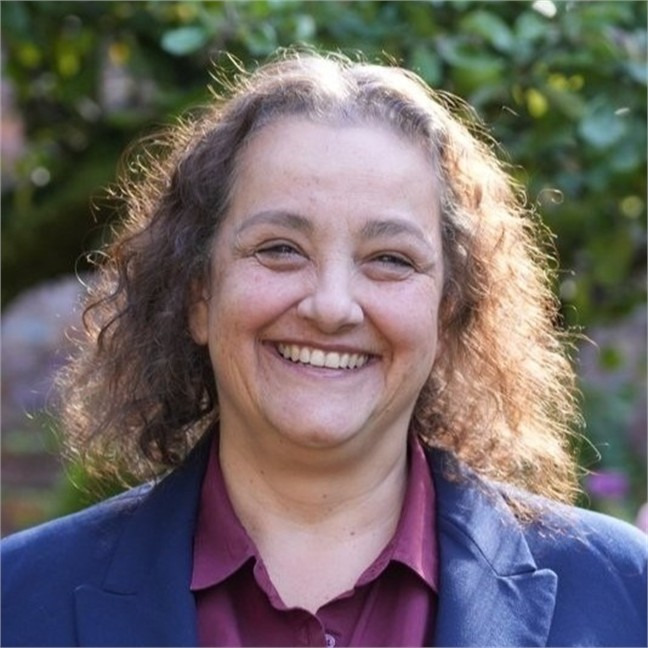
Rebecca D'Cruz is Head of Computer Science at St Albans School, an independent secondary school in Hertfordshire, where she is also responsible for the school's AI Strategy. With over a decade of experience teaching Computing in secondary and tertiary education, Rebecca brings both classroom depth and strategic perspective to her work with AI in education.
Rebecca holds an MPhil in Education from the University of Cambridge, where her research focused on AI literacy in secondary schools and examined how pupils and teachers understand, use, and critically evaluate generative AI tools. Her dissertation was awarded a distinction. Her work bridges the gap between academic research and everyday school practice, and she writes and speaks regularly on the subject for practitioner audiences.
As an AI Quality Mark assessor, Rebecca is committed to supporting schools in developing thoughtful, evidence-informed approaches to AI integration that are good for teachers, for pupils, and for the wider school community.

Tom is the Director of Digital Innovation and Enterprise at Haileybury College, an 11-18 boarding school in Hertfordshire, UK. With 17 years of teaching experience across both state and independent sectors, he’s worn many hats, including Head of Philosophy, PSHE, and Humanities.
Tom has long been fascinated by technology; from tinkering with his Dad’s Apple Macintosh 128K as a child to becoming a Google Innovator, he’s always exploring how digital tools and AI can transform teaching and learning. Today, he is responsible for the strategic evolution of the School's digital landscape. bridging the gap between pedagogy, operations, and enterprise. Tom ensures that emerging technologies, particularly AI, are seamlessly integrated to enhance both academic outcomes and whole-school operational efficiency.
Beyond digital strategy, Tom designs and leads Haileybury's Leadership and Enterprise programme, equipping pupils with critical skills in design thinking, risk-taking, and execution. Tom aims to foster a vibrant entrepreneurial culture by connecting pupils with global networks and cultivating real-world innovation projects with industry leaders.
Tom is an active member of several educational groups, including being a founding member of the National Pedtech Partnership. Outside of work, he’s married with three wonderful children, and an optimistic season ticket holder at Arsenal, convinced this will finally be their year to lift some silverware.
Frequently Asked Questions
Following two extensive pieces of research conducted by Goodnotes on Generative AI in Schools (October 2023) and The Social and Emotional Impact of AI in Schools (September 2024), Good Future Foundation set out to explore documented findings in even more depth.
We achieved this through our partnerships with the likes of the Institute of Global Learning, STEM Learning, Women In AI, The Society of Heads, UTCAI, COBIS and Merrick-Ed. The AI Quality Mark was drawn up with senior leaders in schools, such as Dr Andy Kemp of the National Mathematics and Science College and Laura Knight, Founder of Sapio. Following a review from machine learning specialists at Goodnotes, and the Foundation's very own Student Council, and a pilot with Woodland Academy Trust, the AI Quality Mark went live in September 2024.
There are no experts concerning AI in education. This is a new, fast-paced and rapidly evolving field, with fresh and inspiring research being published every week, if not every day. At the same time products are being launched, technological capabilities increase and application of use takes on a wealth of different guises, with implications for senior leadership, safeguarding, compliance, parent communication and everything in between.
We are committed learners in this space. Our partners are driven and determined professionals eager to ensure that we make a sustainable and positive impact with the schools connected to us. We encourage you to be a part of the journey.
The AI Quality Mark is a self-assessment against a framework. Once you have had a meeting with us and you are happy that going through the process will add value to your organisation, then you can evaluate where you feel you fit against each area of the framework. Each level will give you a set number of points and your total score will determine which level of award you achieve.
When you are self assessing against the criteria, you will notice there are five levels for each area of the framework. Each level will give you a score which contributes to your overall total and the level of achievement within the AI Quality Mark.
There is no limit to the number times you can submit to be assessed. We highly recommend submitting early on in your journey as it gives you a benchmark. The framework is set out so that it guides you on a journey to embedding AI into your school in a responsible and ethical way and by submitting early on, you have a clear pathway ahead.
There are no set times in the year that we accept submissions. You can submit at any time that is convenient for you.
We do not want to add to any teacher’s workload so we are very flexible on the evidence that is submitted for the AI Quality Mark. Some examples of evidence that we accept are plans, teacher testimonials, presentation decks, notes/minutes from meetings etc.
When you receive the framework from us, you will also receive a link to a submission form. On the form, you are able to select the levels you feel your school is working at and attach any evidence for support. The form will save your progress for 15 days if you use the same browser (not in Incognito/Private mode) so that you can complete it at your own pace.
Once you submit your self assessment and evidence, it will be sent to an assessor who will evaluate your submission. They will complete an assessment form with detailed feedback. Once they have done this, a meeting will be organised with the assessor and organisation to discuss and share their feedback and support you on the next steps of your AI journey.
We would still encourage you to complete the self assessment as this gives you a benchmark to understand the next steps in your AI journey.
Once you submit your self assessment and it is sent to our assessor, we aim to get the feedback to you in 2 - 3 weeks.
Any school can apply to go through the AI Quality Mark. We ask that if you are an independent school that you support your local schools and community with developing their use of AI.
We will send the framework to you after the initial meeting which can act as a guide for your AI implementation. As part of the Good Future Foundation, we offer professional development workshops, free to schools, regionally to support as many people as possible. We also have the Teacher Community Platform, which is a fantastic support to those going through the AI Quality Mark. Lots of teachers who have gone through the AI Quality Mark share resources from their schools and best practice with others. It is also a great place to ask any questions and get answers from a range of school leaders, teachers and the Good Future Foundation team.
This is a personal choice, we do not mind if you would like to submit as a whole Trust or as individual schools. We have had schools and Trusts submit their self assessments in either way but what is important is that it is valuable to you.
We accept submissions from schools globally and already have schools around the world who have obtained the AI Quality Mark.
There are no consequences for stopping the process at any point. We want this to be a valuable and supportive process and if it isn’t right for your school or isn’t the right time, we will still be here when you are ready!
There is lots of value in achieving the Progress award as it shows that you are approaching your AI journey with consideration, building a strategy that includes managing data responsibly and preparing staff and students for the future. It gives you a benchmark to work from and a pathway to continue to build your strategy moving forwards. It also demonstrates to your community that you are committed to using AI responsibly and ethically within your organisation.π

Interested in the AI Quality Mark?
Upon submission, you will receive an invitation for a meeting to discuss how to apply for the AI Quality Mark, including the framework for the self-assessment and evidence submission.